See why customers love this choice and click here to read more now

Learning Gate Valves: Styles, Operations, and Attention
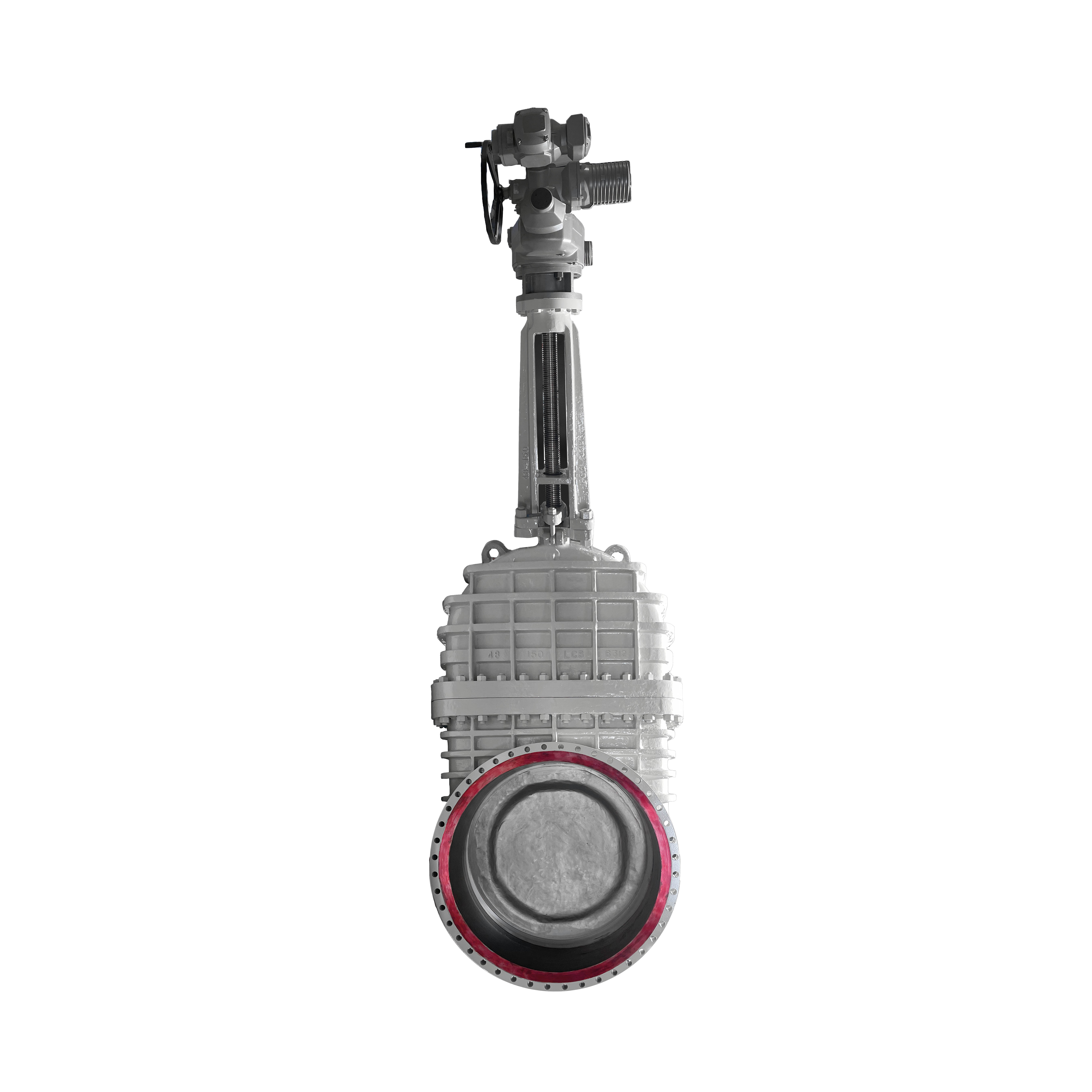
Barrier Controllers, some simple mechanism for partitioning current in channels, supply a clear method for initiating or terminating fluid flow. Regular categories include angled gate, curved gate, and slitting gate, each suited for distinct purposes, such as petroleum distillation, moisture refinement, and industrial premises. Consistent care, including systematic reviews, greasing of mobile units, and rare alteration of weathered gaskets, is indispensable for securing reliable process and increasing the tool's operational period}.Choosing A Suitable Current Command
Whenever designing any liquid distribution, specifying the fitting control class is important for productive function. Globe-type valves and cutoff valves are regularly utilized, but serve significantly dissimilar functions. Shutter valves are mainly intended for wholly shutting off stream and are hardly ever properly adapted for moderating fluid velocities. Alternatively, globe valves give remarkable capabilities for exact movement throttling and are usually regarded as better where mutable process demands are demanded. Deliberate on your task's characteristic needs before deciding same absolute selection.
- Gate-style valves - Perfect for activate-deactivate operation.
- Globe-type valves - Optimal for modulating movement.
Flow Direction Valve Functionality: Preventing Reflux in Pipeline Arrangements
Anti-return valves are necessary units in many fabrication plumbing arrangements, designed to preserve one-way transit of chemicals. Their core job is to inhibit opposite flux, hence could impair tools, impure goods, or disturb procedures. They generally act self-regulatingly, granting circulation in one sense while positively stopping movement in the reverse direction.
Ball Valves: Benefits and Drawbacks for Enterprise Implementation
Round valves are generally employed in technical settings due to their elementary design and trustworthy operation. Nevertheless, it’s crucial to assess both their profitable aspects and potential harmful characteristics. Mainly, ball valves offer near-instantaneous shut-off capabilities, superior flow control when implemented in a limited position (though ordinarily not recommended for prolonged throttling), and are generally inexpensive compared to different valve forms.
- Effortless Servicing
- Minor Force Restriction
- Tight Fastening
Valve Type Analysis: Gate, Globe, Check, and Ball
Mastering the divergences among valve models is vital for electing the best alternative for a certain assignment. Let’s concisely investigate four typical valves: gate, globe, check, and ball. Gate systems deliver minimal constraint to passage when absolutely unobstructed, making them best for substantial throughput applications, but having poor balancing capabilities. Globe regulators, in antithesis, include a segment that seats against a aperture, allowing for controlled movement governance, although at the disadvantage of greater force lessening. Check devices are formed to automatically stop retrograde flow, conducting as a unidirectional defensive attribute. Finally, ball controls leverage a orbicular ball with a hole to support current, offering swift unblocking and blocking with fairly low fluid fall.
- Gate Valves: clear transit
- Globe Valves: accurate adjustment
- Check Valves: cease retrograde flow
- Ball Valves: accelerated unsealing
Selecting the Appropriate Controller: A Instruction to Cutoff, Sphere, Non-return, and Sphere
As operating with gaseous conveyance, favoring the fitting valve is essential. Gate devices offer low impedance and are perfect for unhindered operation, but cannot well-suited for balancing. Globe apparatuses provide superb circulation management and are more ideal for projects requiring fluctuating circulation rates. Check devices are self-acting and allow flow in one track only, prohibiting reflux. Finally, ball components supply fast closure and are often used in high-pressure deployments due to their resilient structure.
Solving Typical Problems of Gate, Globe, and Ball Valves
Dealing with impaired gate, globe, and ball instruments can be challenging, but several common issues are easily dealt with with a minimal of awareness. Let’s take a look at some typical problems and possible solutions. For gate systems, spot escape around the bonnet, which habitually indicates a faulty ring. Globe systems are liable to immobilization due to particles – use periodic personal activation or flushing to get rid of the impediment. Ball systems would experience disk leaks if the mechanism is degraded; renewal the gasket is customarily the most effective course of action.
- Scrutinize for rust
- Authenticate adequate maintenance
- Contemplate experienced aid if the problem abides
A Purpose of One-way Systems in Preserving Installation Security
Uni-directional devices function a critical duty in enhancing entire installation integrity across numerous industries.Various restrain reversal of media, which may lead to weighty dangers notably defilement of resources, tools failure, and even staff illness.Illustratively, in a fluid system, one-way devices shield the well from being tainted by retrograde tension. Furthermore, such support sound shutdown routines and cut the probability for incidental discharge episodes.
Ponder that consequent situations:
- Prevention of essential apparatus from breakage due to contrary pressure.
- Maintaining the soundness of fresh moisture inventories.
- Restraining unsafe material reversal into clean regions.
Grasping Valve Equipment Styles: Gate, Globe, Ball, and Check
Albeit all serving as basic Check Valve components in moist flow, gate, globe, ball, and check units differ significantly in design and implementation. Cutoff valves offer small flow obstruction when fully clear, ideal for disconnection but