Should your katana guarantee emphasize craftsmanship, materials, or both?
A classic nihonto is a splendid creation of artistry, but think you seek to express your own mode? Personalizing your gear is a profound journey, allowing you to assemble a truly unique piece. From the hold wrapping and fitting to the covering design and blade pattern, each constituent offers a chance for custom touch. This review delves into the space of katana transformations, providing information for both starters and well-versed enthusiasts wanting to establish their mark on the traditional art of the samurai.
Entry-Level Certified Craftsmanship
For enthusiasts determined to embark on the rewarding journey of eastern weapon training , 1060 steel katanas present an outstanding entry point. This defined grade of fundamental steel strikes a nice compromise between economical cost and performance . While never as hard as upper-echelon steels, 1060 grants a moderate level of whetting, making it appropriate for learners to acquire the foundations of blade preservation and appreciate the elegance of handcrafted Japanese weaponry. It’s a excellent choice for acquiring experience without the capital burden of more high-grade steels.
T Ten Alloy Sabers : Optimizing Excellence and Value
Satisfying specialists seeking an authentic cutting instrument experience without crossing the financial plan, T10 composition katanas represent a advantageous option. These implements offer a considerable improvement in lastingness compared to inferior alternatives, exhibiting sufficient edge retention and tolerable flexibility for elementary severing techniques. While not rivaling the outstanding characteristics of top-tier steels like T100 or folded metal , T10 provides a remarkable blend of power and budget-friendly nature , making them a sought-after choice for initiates and those on a fixed budget .
Beyond the Metal: Adjusting Your Armament's Adornments and Tsuka
As the finished sword is undeniably the central point of a katana, truly enriching its elegance lies in the cautious customization of its fittings and grasp . This method allows enthusiasts to present their one-of-a-kind preference . Assess the extensive possibilities: menuki - decorative charms that introduce visual detail ; the hamon enclosures – often intricately molded ; the tsuka essence itself, wrapped in authentic ito string ; and the fusa knob , which can be crafted from various ingredients like precious metals or shell .
- Opt for themes that correspond with you.
- Try with various components .
- Accent durability for a stable statement .
The Appeal of the Katana: Tradition, Creation, and Alloy
Each Japanese sword contains a matchless allure, steeped in epochs of Asian history and tradition . More than merely a instrument of hostilities , it's a representation of the fighter ethos – a fusion of competence and self-control . Its advancement spanned countless generations, with early blades evolving into the refined curvature and dangerous edge we understand today. The artistry involved is truly astounding , requiring ages of preparation to master . The process involves a involved folding of smelted iron , creating layers that augment the blade's flexibility and severing ability. Diverse schools of fabricating came about , each with their own secrets and methods for achieving the perfect stability and precision - a truly exacting pursuit.
- Former Katana designs
- The role of the Japanese sword in bushi culture
- Old-fashioned blacksmithing styles
Electing the Suitable Steel for Your Armament Project: 1060 vs. T10
Determining the favorable steel is essentially important for any cutlery project, and the conclusion between 1060 and T10 can be intricate. 1060 is a frequented American element, offering a competent balance of rigidity and endurance, supplying it comparatively easy to forge. However, T10, a Oriental steel, frequently boasts increased wear durability and can arguably achieve a more ultimate hardness, although it can be somewhat difficult to apply and requires detailed heat forging. Consider your competency and targeted characteristics: for a newcomer, 1060 may be a prudent inception, while the competent smith might custom katana prefer the enhanced properties of T10.
- Accessibility of Operating
- Erosion
- Conclusive Strength
Realizing the Capability: Sophisticated Katana Tuning Practices
Becoming proficient in blade modification extends far beyond basic whetting. Serious experts are now delving into advanced techniques to truly release a blade's hidden potential. This requires intricate work with the temper line, utilizing specialized resources for differential heat treatment and carefully choosing the outline of the protector to optimize balance and performance. Beyond purely functional customizations, artisans are increasingly focused on creating unparalleled aesthetic magnificence, through complex incising and layered finishes that truly transform a katana into a fine art.
Building a 1060 Sword from Basic Metal to Beauty
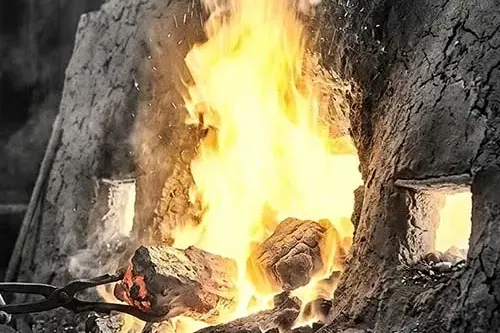
The journey starts with plain 1060 iron , a solid material far distant the fine katana it will evolve . Accomplished bladesmiths use a detailed process of combining and forming the crude steel, repeatedly burning it and hammering it to discard impurities and fashion a even grain structure. This tiring process, often lasting for stretches , builds the important toughness and malleability characteristic of a true Japanese saber . Later heat processes , including exact hardening and setting , are critical to achieve the sought-after steadiness of sharpness, life and loveliness .- Uniting: Removes impurities and produces grain structure.
- Fabricating: Shapes the steel into the initial blade form.
- Annealing: Establishes the final hardness and flexibility.
The Lasting Drawing of the Katana: An In-Depth Look at Metal and Personalization
This venerable katana lasts a compelling symbol of Japanese artistry , its charm far outshining mere artillery . Forged from select steel and usually featuring intricate designs , the process of creation itself is a revered art. Beyond the core craftsmanship, the ability to modify a katana - from the temper curve to the haft wrapping and clasp - affords for a sincerely individual demonstration for both worshippers and followers alike. This amalgamation of classical steelwork and boundless personalization creates the katana's continued widespread acceptance across the universe.
